
Pakistan, Saudi Arabia, and Türkiye Makkah Joint Defence Agreement
Abdul Moiz
August 24, 2026
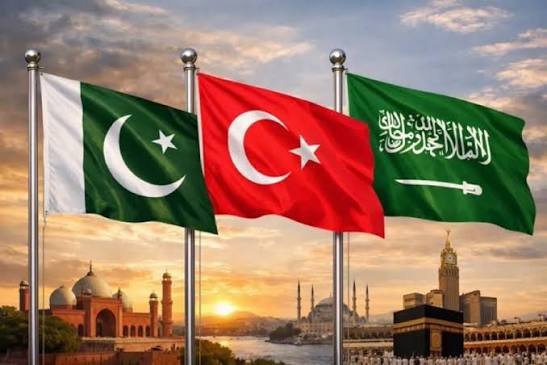
A massive geopolitical shift is reshaping the Muslim world. On August 7, 2026, leaders from Pakistan, Saudi Arabia, and Türkiye gathered in the holy city of Makkah to sign a landmark trilateral security pact officially known as the Makkah Joint Defence Agreement (MJDA).
This high-profile agreement unites three major regional heavyweights—combining Pakistan’s seasoned military experience, Türkiye’s advanced defence technology, and Saudi Arabia’s massive economic and geopolitical influence.
1.) What is the Makkah Joint Defence Agreement?
At its core, the MJDA functions as a collective security shield. The primary clause of the treaty dictates that an armed attack against any one of the three member states will be treated as an attack against all three.
- The Signatories: The pact was signed by Saudi Crown Prince Mohammed bin Salman, Turkish President Recep Tayyip Erdoğan, and Pakistani Prime Minister Shehbaz Sharif.
- The Main Objectives: The agreement focuses heavily on enhancing collective deterrence, strengthening defence industry cooperation, intelligence sharing, and joint military training.
- A Defensive Nature: Leadership from all three nations has clarified that the framework is entirely defensive, aiming to preserve regional peace rather than target any specific nation.
Why Was This Agreement Needed?
The decision to form this powerful alliance did not happen overnight. It was driven by a rapidly changing and volatile security environment across the Middle East and South Asia.
1. Rising Regional Tensions and Vulnerabilitie
In recent months, the Middle East has faced severe instability. Ongoing regional conflicts, asymmetric cross-border missile and drone threats targeting energy infrastructure, and constant disruptions to vital maritime trade routes have left key Gulf nations increasingly exposed. Furthermore, shifting global alliances and the shifting reliability of traditional external security guarantees made it clear that regional powers could no longer rely solely on outsourced protection. These mounting security crises forced Islamabad, Riyadh, and Ankara to reassess their vulnerabilities and proactively construct a self-reliant, homegrown defence architecture capable of handling modern multi-domain warfare.
2. Evolution of Existing Bilateral Ties
The Makkah agreement builds directly upon foundations that were already being laid between the nations. For instance, Pakistan and Saudi Arabia have long maintained close military relations, while Türkiye and Pakistan have deepened cooperation through joint naval projects and defence manufacturing. Simultaneously, Saudi Arabia has emerged as a major buyer of Turkish-made defence technology, naturally paving the way for a united trilateral framework.
3. Creating a Self-Reliant Deterrent
By formalizing these ties into a single trilateral umbrella, Pakistan, Saudi Arabia, and Türkiye have created a formidable deterrent. The partnership bridges three distinct strengths:
Saudi Arabia: Major economic powerhouse and energy hub.
Türkiye: A leading NATO military force with advanced indigenous defence production.
Pakistan: A seasoned military power and a recognized nuclear-armed state
2.) Key Highlights of the Trilateral Pact
The decision to form this powerful alliance did not happen overnight. It was driven by a rapidly changing and volatile security environment across the Middle East and South Asia.
1. Collective Security Clause and Mutual Defence
The cornerstone of the Makkah Joint Defence Agreement is its binding mutual defence clause. Patterned after collective security models, it mandates that an act of military aggression, armed invasion, or strategic attack against Pakistan, Türkiye, or Saudi Arabia will be officially deemed an attack against all three nations. These powerful deterrent pools combine the conventional military might, strategic depth, and technological resources of all three countries, ensuring that any hostile foreign actor must think twice before provoking a member state.
2. An Open Framework for Regional Inclusion
Rather than acting as an exclusive or isolated bloc, the signatory nations designed the pact to be fully expandable. Leadership from Islamabad, Ankara, and Riyadh explicitly noted that the agreement remains completely open to other friendly regional countries that share a genuine vision for long-term stability, economic prosperity, and peace. This allows room for future allies to plug into the security architecture, fostering broader regional cooperation.
3. Profound Symbolic and Strategic Weight in Makkah
The decision to sign the treaty in the holy city of Makkah injected immense diplomatic and spiritual significance into the historic realignment. By finalizing the security pact in such a revered location, the leadership underscored the gravity of their commitment, signaling to the global community a unified, sovereign, and resolute front built on deep mutual trust and shared values.
3.) Strategic Insight: Q&A Perspective on This Realignment
As we look past the formal headlines and examine the deeper architectural blueprint of this alliance, a fascinating narrative emerges. From a strategic design and communications standpoint, the MJDA is not just a military treaty—it is a masterclass in structural synergy
The Power of Complementary Assets:
For decades, regional alliances often struggled because member states brought overlapping vulnerabilities to the table. Here, the brilliance lies in the distinct, non-overlapping pillars of power. You have Saudi financial muscle and energy security, Türkiye’s cutting-edge drone technology and defence manufacturing, and Pakistan’s battle-tested military cadre and strategic depth. It creates an ecosystem where each nation plugs a vital gap for the other
Shifting from Dependency to Autonomy
The most profound takeaway is the psychological and operational shift away from traditional, external security umbrellas. By institutionalizing a self-reliant defence framework, these nations are effectively redesigning the regional architecture of the Muslim world—moving from reactive defence to proactive, homegrown deterrence.
A Visual and Diplomatic Masterstroke:
Selecting Makkah as the signing venue was a brilliant branding choice. It anchors the agreement not merely in cold geopolitical calculus but in shared civilizational gravity, ensuring absolute resonance across global audiences.
4.) Conclusion
The signing of the Makkah Joint Defence Agreement marks a defining turning point for modern geopolitics. By merging their military might, technological innovations, and economic power, Pakistan, Saudi Arabia, and Türkiye have laid the groundwork for lasting regional self-reliance. As these nations begin implementing the terms of the treaty, the pact stands ready to redefine the balance of power, ensuring greater security, deterrence, and stability for the entire region.
FAQs
The agreement was officially signed on August 7, 2026
It was finalized during a high-level summit in Makkah, Saudi Arabia.
The core policy states that an armed attack against any single member state will be treated as an attack against all three, creating a unified regional deterrence.
The pact was fast-tracked due to escalating security threats, regional conflicts in West Asia, and a shared desire among the three nations to build independent, collective defence capabilities.
No. Leaders from Saudi Arabia and Türkiye have explicitly stated that the partnership is purely defensive, targets no external actor, and aims only to safeguard long-term regional peace and stability.